Embarking on a significant tattoo project, such as a full sleeve or intricate back piece, demands meticulous planning. Understanding how to plan for a long tattoo session is paramount for both your comfort and the artist’s best work. This guide equips you with the knowledge and tools to navigate extended appointments successfully. Long tattoo sessions, often spanning six to eight hours or more, can be physically and mentally taxing. Proper preparation significantly mitigates discomfort, reduces anxiety, and contributes to a smoother process.
For instance, starting hydration 48 hours in advance improves skin elasticity, making it more receptive to ink and potentially reducing pain. The goal is to create an environment where both you and your tattoo artist can focus on the art, involving physical readiness, mental fortitude, and a well-stocked arsenal of comfort items. This structured approach transforms a daunting experience into a manageable and enjoyable one, paving the way for your desired tattoo sleeve or back piece tattoo .
Key Takeaways
- Prioritize hydration and nutrition in the 48-72 hours before your session.
- Get ample sleep the night before and in the preceding days.
- Choose comfortable, dark, and easily accessible clothing.
- Pack a ‘session survival kit’ with snacks, drinks, entertainment, and comfort items.
- Communicate openly with your tattoo artist about your needs and comfort levels.
What Physical Preparations Are Essential Before a Long Tattoo Session?
To ensure a successful and comfortable extended tattoo session, prioritize your physical well-being by rigorously preparing your body in the days leading up to your appointment.
Hydration: The Foundation of Good Skin
Beginning 48 to 72 hours before your session, increase your water intake. Proper hydration is fundamental for skin elasticity and resilience, making skin more receptive to tattooing and aiding smoother ink application. Dehydrated skin can increase discomfort. Aim for 8-10 glasses of water daily, considering electrolytes if active. This internal hydration supports overall health and efficient skin healing.
Nutrition: Fueling Your Endurance
Consume a balanced, substantial meal rich in complex carbohydrates, healthy fats, and protein before your appointment. This provides sustained energy and helps stabilize blood sugar, preventing dizziness or fatigue. Examples include oatmeal with fruit and nuts, a whole-wheat sandwich with lean protein, or a pasta dish with vegetables. Avoid sugary snacks or heavy, greasy foods that can cause energy crashes or digestive discomfort.
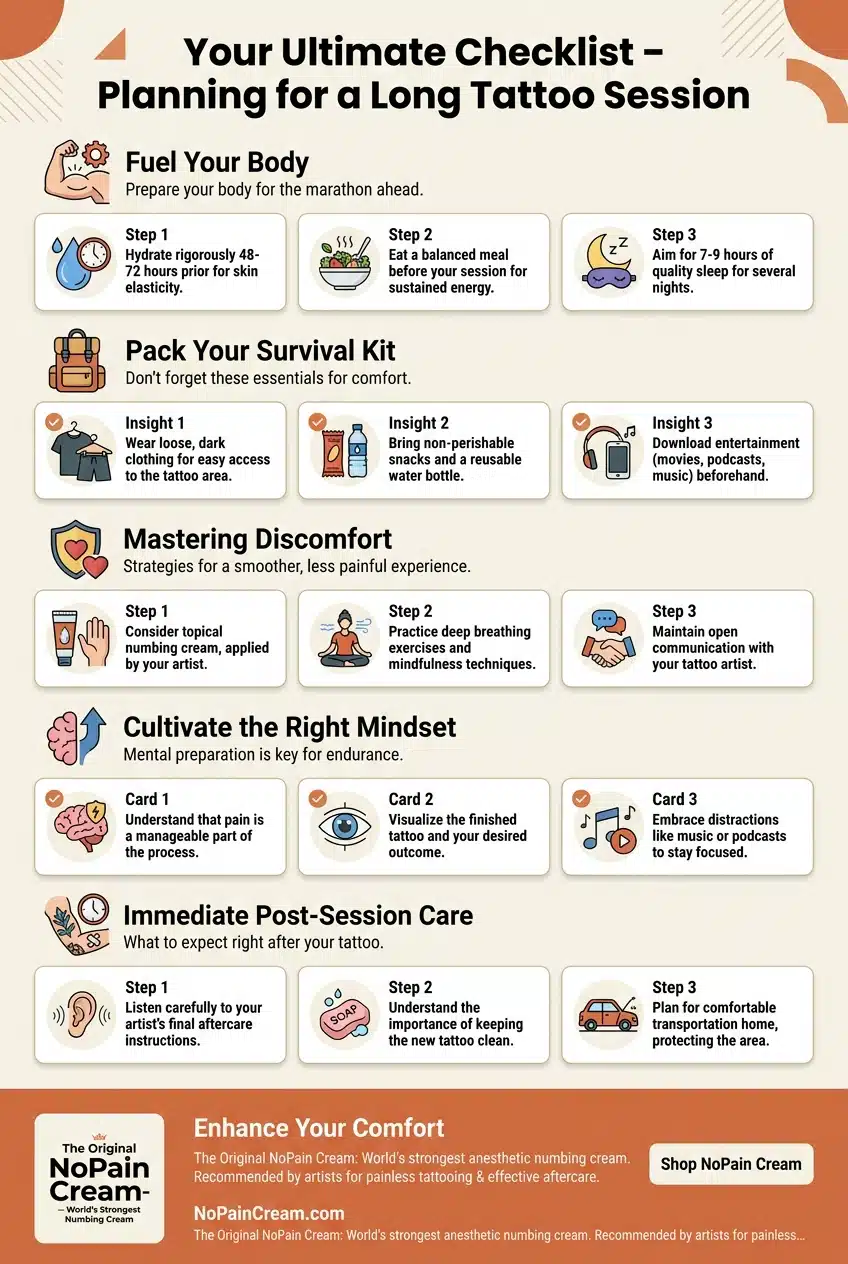
Your Ultimate Checklist
Planning for a Long Tattoo Session
Fuel Your Body
- Prepare your body for the marathon ahead.
- Hydrate rigorously 48-72 hours prior for skin elasticity.
- Eat a balanced meal before your session for sustained energy.
Pack Your Survival Kit
- Don’t forget these essentials for comfort.
- Wear loose, dark clothing for easy access to the tattoo area.
- Bring non-perishable snacks and a reusable water bottle.
Mastering Discomfort
- Strategies for a smoother, less painful experience.
- Consider topical numbing cream, applied by your artist.
- Practice deep breathing exercises and mindfulness techniques.
Cultivate the Right Mindset
- Mental preparation is key for endurance.
- Understand that pain is a manageable part of the process.
- Visualize the finished tattoo and your desired outcome.
Immediate Post-Session Care
- What to expect right after your tattoo.
- Listen carefully to your artist’s final aftercare instructions.
- Understand the importance of keeping the new tattoo clean.
- Whole grains (oats, brown rice, whole-wheat bread)
- Lean proteins (chicken, fish, tofu, eggs)
- Healthy fats (avocado, nuts, seeds)
- Fresh fruits and vegetables
Sleep: Your Body’s Best Ally
Prioritize 7-9 hours of quality sleep for several nights leading up to your session. Adequate rest significantly enhances pain tolerance, boosts your immune system, and improves overall well-being, all critical for enduring an extended period under the needle. A well-rested body better handles stress and discomfort. Research shows chronic sleep deprivation can reduce pain threshold by up to 20%, making proper rest crucial for pain management. Establish a consistent sleep schedule to maximize benefits.
Skin Care: Prepping the Canvas
Beyond internal hydration, proper external skin care is vital. Avoid alcohol 24-48 hours before your session, as it dehydrates skin and thins blood, potentially increasing bleeding and affecting ink retention. Refrain from excessive caffeine on appointment day, as it can heighten sensitivity and anxiety. Ensure the tattoo area is clean and moisturized in the days prior, but avoid heavy lotions or oils immediately before the session, as these interfere with stencil application. Understanding how tattoos work, including needle-skin interaction, helps effective preparation. Finally, consider your overall physical health.
Avoid strenuous activity 24 hours before to prevent muscle fatigue. If you have minor cuts, scrapes, or sunburn on or near the area, reschedule. Tattooing compromised skin leads to complications, poor ink absorption, and increased infection risk. Your artist needs a healthy, intact canvas for the best result and smooth healing.
Your Essential Tattoo Session Survival Kit: What to Bring
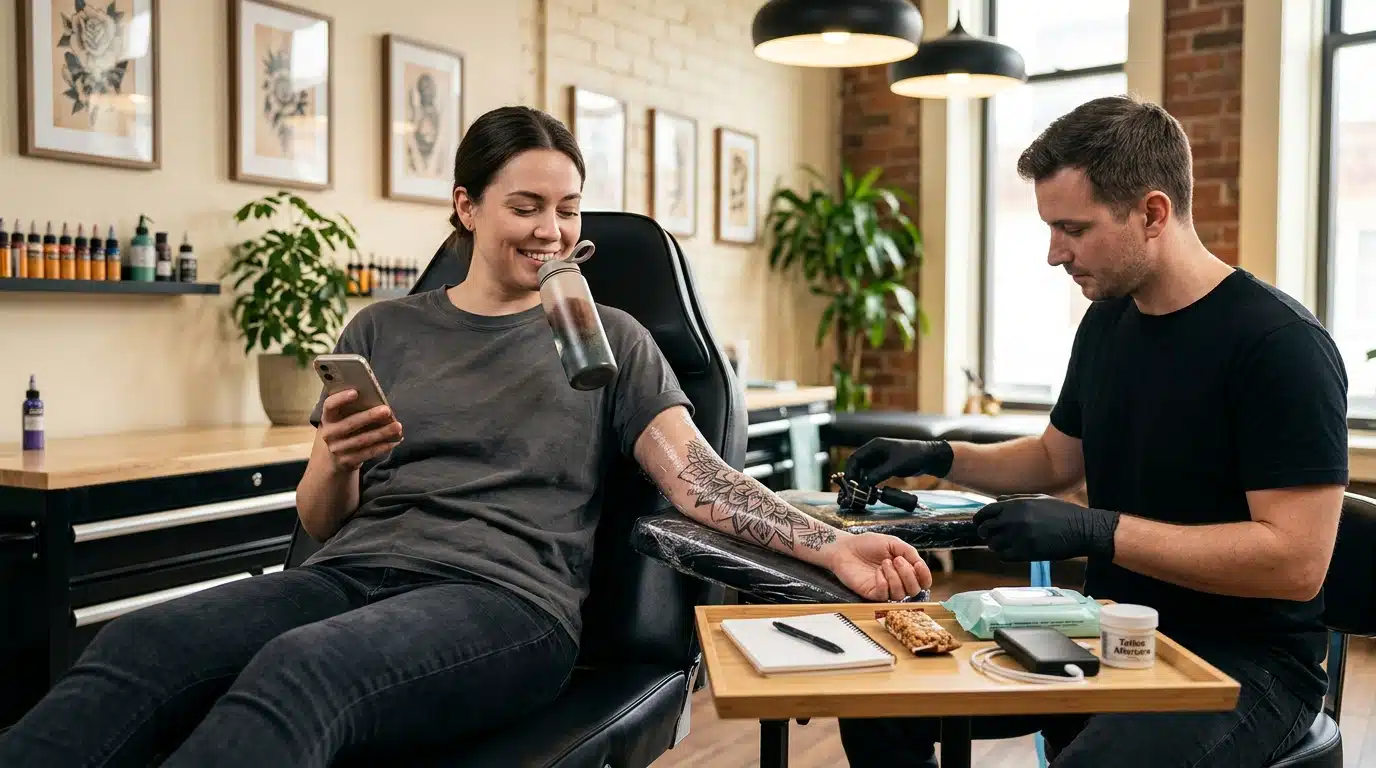
Preparing a comprehensive survival kit is paramount for comfort and endurance during extended tattoo sessions. Select loose-fitting, dark-colored clothing that allows easy access to the tattoo area and conceals potential ink stains. Layering is recommended, as studio temperatures fluctuate, enabling you to adjust and maintain comfort. Prioritizing comfort in clothing significantly reduces distractions and enhances your overall experience.
Sustenance: Food and Drink
Keeping your energy stable is crucial for enduring a long tattoo session. Pack non-perishable, easy-to-eat snacks like granola bars, nuts, or fruit for sustained energy without sugar crashes. A reusable water bottle is essential for hydration; dehydration can increase pain sensitivity and impact skin’s ink receptiveness. Hydrated skin is more supple, helping the needle glide smoothly and ensuring even ink setting. Sip water consistently to maintain optimal hydration.
Entertainment: Passing the Time
Long hours in the tattoo chair can feel arduous without adequate mental distraction. Before your appointment, download movies, podcasts, or music playlists to your devices, as studio Wi-Fi can be unreliable. This ensures a steady stream of entertainment, diverting focus from discomfort and passing time quickly. Consider a variety of options:
- Curated music playlists for different energy levels
- Engaging audiobooks or podcasts
- Pre-downloaded movies or TV show episodes
Don’t forget headphones to immerse yourself without disturbing others.
Hygiene and Comfort Items
Beyond digital entertainment, personal comfort and hygiene items vastly improve your experience. A portable charger is indispensable for devices. Bring comfort items like a small pillow or light blanket for awkward positions. Pack lip balm for dry air, hand sanitizer, and wet wipes for quick freshen-ups. For comprehensive preparation and skin support, consider a specialized tattoo numbing cream bundle designed to manage discomfort.
Essential Personal Items and Documents
Finally, ensure essential personal items and documents are accessible. This includes identification and preferred payment method for paperwork and transactions. A small, sealable bag is useful for personal trash, keeping your area tidy. These practical considerations streamline your experience, allowing you to focus entirely on the artistic process without unnecessary logistical interruptions.
Mastering Pain Management and Endurance During Your Tattoo
Using a topical numbing cream, applied by your artist, can significantly reduce discomfort during the initial hours of a long tattoo session.
The Role of Numbing Cream
To effectively manage initial discomfort during extensive tattoo sessions, discuss using a topical numbing cream with your artist. These specialized creams, like those found in NoPainCream’s range of topical anesthetics, temporarily desensitize nerve endings. Applied as directed, typically a short while before tattooing, they significantly diminish initial sensations, allowing you to settle in more comfortably. This proactive approach makes the crucial first few hours more manageable, setting a positive tone.
Breathing and Mindfulness Techniques
Beyond topical solutions, cultivating mental resilience through deep breathing and mindfulness is a powerful tool for pain management. Practicing diaphragmatic breathing—slow, deep breaths that expand your abdomen—activates your parasympathetic nervous system, promoting relaxation and reducing pain perception. Consistent diaphragmatic breathing can lower heart rate and perceived pain during stressful situations. By consciously redirecting focus to your breath, you create a mental anchor, helping manage the continuous sensation of the tattoo machine.
Communication with Your Tattoo Artist
Maintaining open communication with your tattoo artist is paramount. They are your partner and need to be aware of your comfort levels to adjust their approach or pace. If you’re experiencing significant pain, discomfort, or need a moment to regroup, voice this clearly.
- Clearly articulate your current pain level (e.g., 1 to 10).
- State your need for a short break or position change.
- Discuss any specific discomfort points.
This dialogue ensures your artist can respond appropriately, whether by pausing, shifting to a less sensitive area, or offering alternative comfort strategies.
Taking Breaks Effectively
Strategic short breaks are essential for physical and mental recuperation during long tattoo sessions. Utilize these brief pauses (typically 5-10 minutes) to stand up, stretch, hydrate, and have a quick snack. Lengthy interruptions can disrupt workflow, cause skin swelling, and allow natural pain blockers to dissipate, making the return to the needle feel more intense. Sustaining mental and physical endurance involves continuous focus. As hours pass, fatigue can amplify sensations. Employ distraction techniques like music or podcasts, and visualize the completed artwork.
This sustained mental fortitude, combined with practical pain management, empowers you to remain present and resilient for a positive journey to your finished tattoo.
Mental Preparation: Cultivating the Right Mindset for a Long Session
Mental preparation for a long tattoo session involves understanding pain as a manageable part of the process, rather than an overwhelming obstacle. Psychological readiness significantly improves pain tolerance and overall experience.
Setting Realistic Expectations
Approaching a long tattoo session with the right mental framework is paramount. Acknowledge that discomfort is an inherent part of the process, especially during extended periods. With proper mental conditioning, this discomfort becomes manageable. Mentally preparing for the sensation allows better coping, transforming potential dread into focused acceptance. Understanding that pain is temporary and serves a purpose in creating lasting art helps reframe the experience.
Visualizing Success
Visualization is a powerful tool for mental endurance. Before and during the process, vividly imagine the completed tattoo on your skin and the positive feelings associated with achieving your artistic goal. Picture the intricate details, vibrant colors, and how the finished piece will look. For instance, if getting a large back piece, visualize yourself confidently showcasing the detailed artwork. This mental imagery shifts focus from immediate discomfort to the rewarding outcome, reinforcing commitment and motivation.
Dealing with Boredom and Discomfort
Long tattoo sessions can lead to physical discomfort and mental fatigue or boredom. Embracing distractions is highly effective. Bring headphones and immerse yourself in favorite music, engaging podcasts, or captivating audiobooks. Auditory distractions significantly reduce pain perception by diverting brain attention. Research indicates music therapy can decrease anxiety and pain, supporting relaxation. While engaged, focus on the artist’s meticulous skill and your body’s resilience.
Positive Self-Talk
Maintaining positive internal dialogue is essential. Remind yourself of your commitment to the artwork and the rewarding, permanent outcome. When negative thoughts or sensations arise, actively combat them with positive affirmations:
- Acknowledge discomfort without judgment.
- Reframe negative thoughts (e.g., “I can’t do this”) into empowering statements (“I am strong, this pain is temporary”).
- Focus on progress, even small sections.
- Repeat affirmations reinforcing endurance and the tattoo’s value.
This conscious effort significantly impacts pain tolerance and overall experience.
Cultivating a resilient mindset involves realistic expectations, forward-looking visualization, strategic distraction, and positive self-talk. By mentally preparing for the challenges, you navigate the experience with greater comfort and emerge with beautiful art and a sense of accomplishment. This comprehensive approach ensures your mental state supports physical endurance.
Immediate Post-Session Care and What to Expect
Immediately after your long tattoo session, carefully adhere to your artist’s instructions regarding cleaning, bandaging, and initial wound care. Your tattoo artist is your primary guide, providing crucial instructions tailored to your specific tattoo and skin. Pay close attention as they clean the fresh tattoo, apply a protective bandage (sterile wrap or breathable second-skin like Saniderm or Tegaderm), and explain its duration. This immediate guidance is paramount for preventing infection and setting the stage for optimal healing.
Initial Aftercare Instructions
Initial aftercare instructions are critical for protecting your new tattoo from infection and promoting healthy healing. Keep the tattooed area meticulously clean. After removing the initial bandage, as instructed, wash the tattoo 2-3 times daily with a mild, fragrance-free antibacterial soap, gently patting it dry with a clean paper towel. For optimal healing, follow up with a dedicated aftercare cream. A pea-sized amount is usually sufficient, as over-moisturizing can create a breeding ground for bacteria.
For a detailed guide on what to do and what to avoid, consult our Tattoo Aftercare: The 10 Essential Do’s and Don’ts for Healing.
Getting Home Safely
Planning for comfortable and protected transportation home is crucial to prevent immediate damage or irritation to your fresh tattoo. Safeguard your new art by:
- Ensuring the tattooed area is covered with clean, breathable fabric if exposed.
- Avoiding tight clothing that could rub against the tattoo.
- Adjusting your seat or position to minimize contact.
First 24 Hours of Healing
The first 24 hours post-session are critical for initial healing. Avoid direct sunlight exposure, as UV rays damage delicate healing skin and fade ink. Refrain from submerging your new tattoo in water; this means no baths, swimming pools, hot tubs, or saunas. Adhering strictly to these precautions lays a strong foundation for a healthy and vibrant tattoo.
how to plan for a long tattoo session: Practical focus 6
Optimizing your tattoo appointment schedule ensures adequate preparation and minimizes last-minute stress. Discuss your availability and energy patterns with your artist during the consultation. This collaborative approach allows the artist to plan their day effectively, ensuring they are at their best for your intricate work.
Proper nutritional fueling is paramount for maintaining stamina and comfort. Consuming carbohydrates and protein 1-4 hours before helps maintain glycogen stores and satiety.
Selecting the right attire is practical yet often overlooked. For back or rib pieces, a button-down shirt worn backward or a loose robe provides coverage and accessibility.
Planning your transportation and post-session recovery logistics is crucial. After several hours in a fixed position, you’ll likely feel fatigued and sore.
- Confirm the studio’s exact location and parking in advance.
- Arrange a reliable ride home (friend, family, or pre-booked service), especially for extensive sessions.
- Pack a small recovery bag for the journey, including a light snack, water, and a small pillow.
This proactive approach ensures you focus on your new artwork and recovery, not worrying about getting home safely.
Effectively managing distractions during a long tattoo session enhances comfort. Prepare low-friction entertainment that doesn’t interfere with your artist’s concentration or require constant interaction. Always check with your artist beforehand about their studio’s policy on personal entertainment.
FAQ
What should I do the day before a long tattoo session?
The day before a long tattoo session is crucial. Stay well-hydrated, eat nutritious meals (complex carbs, lean proteins), and get 7-9 hours of sleep. Avoid alcohol and excessive caffeine. Ensure the tattoo area is clean and moisturized, but avoid applying lotions or oils immediately before your appointment unless instructed by your artist.
How do you deal with pain for a 6-hour tattoo?
Dealing with pain during a 6-hour tattoo involves a multi-faceted approach. Proper hydration and nutrition beforehand are foundational. During the session, use breathing techniques and distractions like music or podcasts. Communicate openly with your artist, asking for breaks if needed. Topical numbing creams, applied as guided, can also be valuable for managing pain.
Can I use numbing cream for a full sleeve session?
Yes, you can often use numbing cream for a full sleeve session, but discuss it with your artist beforehand. Many artists are comfortable with numbing creams if applied correctly (typically 1-2 hours before). Effectiveness varies, and artists may have preferences. Numbing cream can significantly enhance comfort during extensive hours, allowing for better endurance.
What should I eat and drink during a long tattoo session?
During a long tattoo session, maintain energy and hydration. Bring easy-to-eat, non-messy snacks like granola bars, fruit, nuts, or jerky for steady energy. Keep a reusable water bottle and sip regularly. Avoid sugary drinks that cause energy crashes. Always check with your artist before eating or drinking to avoid interference.
How do you mentally prepare for a painful tattoo?
Mentally preparing for a painful tattoo involves several strategies. Set realistic expectations, acknowledging discomfort is manageable. Practice mindfulness and deep breathing. Visualize the final artwork and satisfaction. Use distractions like playlists or podcasts. Remind yourself why you want the tattoo and focus on the artist’s skill. Positive self-talk helps manage anxiety and perceived pain.
Final thoughts
Planning for a long tattoo session is crucial for a comfortable and successful experience. By following these preparations, you ensure both your well-being and the artist’s ability to create stunning, lasting art.