Can the tattoo cream already in your bathroom double as aftersun? For fully healed skin, the answer comes down to the formula—and what your skin needs.
THE SHORT ANSWER
A suitable tattoo aftercare cream can work as an after-sun moisturiser on intact, fully healed skin. It will not provide sun protection or reverse UV damage. Fresh tattoos and sunburn need their own care.
Start with the skin you have today.
Dry, intact skin
A suitable aftercare moisturiser can fit your after-sun routine.
See the routineA fresh tattoo
Follow your artist’s care plan and keep the tattoo out of direct sun.
Read healing adviceSkin needing care
Get appropriate advice before using your usual tattoo cream.
Read sunburn guidance01 / UNDERSTAND THE DIFFERENCE
Aftersun vs moisturiser vs tattoo aftercare
These products overlap because moisturising is part of both everyday skincare and after-sun care. The NHS includes an unperfumed moisturiser among the options for easing sunburn symptoms, alongside aftersun cream or spray. You do not automatically need a separate aftersun product just because you have spent time outdoors.
| Product | Usual role | What to check |
|---|---|---|
| Aftersun cream or lotion | Moisturising skin after sun exposure. | The whole formula and its directions; “aftersun” alone does not guarantee suitability for a tattoo. |
| Everyday moisturiser | Keeping skin hydrated and reducing dryness. | Choose a formula your skin tolerates and check fragrance and other ingredients. |
| Tattoo aftercare cream | Moisturising tattooed skin as part of the product’s intended care routine. | Whether it suits intact, healed skin. Follow separate instructions while a tattoo heals. |
| Sunscreen | Reducing exposure to UV rays when used correctly. | Broad-spectrum protection, SPF 30 or higher and water resistance for outdoor use on healed skin. |
The useful question is therefore not which pot has the most reassuring name. It is whether the formula fits the condition of your skin. An old tattoo that feels dry after a shower is different from a two-week-old tattoo, even if both belong to the same person.
02 / KNOW YOUR FORMULA
What makes a useful after-sun moisturiser?
Look for a formula that both adds moisture and helps your skin hold on to it. DermNet explains how humectants, emollients and occlusives work together in moisturisers. These are some of the ingredients you may see on the label.
- Glycerin
- ATTRACTS MOISTUREA humectant that attracts and retains water in the outer skin layer.
- Dimethicone
- HELPS RETAIN MOISTUREHelps reduce water loss from the skin’s surface.
- Panthenol
- HYDRATION & BARRIER CAREDexpanthenol formulas have been studied for hydration and skin barrier benefits.
- Niacinamide
- DRY-SKIN CARENiacinamide-containing moisturisers have been studied for dry skin and barrier function.
For example, a controlled study of topical dexpanthenol found improvements in skin hydration and reduced water loss in the formulations tested. Separate randomised studies of niacinamide/glycerin moisturisers reported benefits for dry skin. These studies support the rationale for such ingredients, but did not test NoPain® Aftercare as a sunburn treatment.
Read beyond the front label
Aloe is a familiar aftersun ingredient, but it should not be your only selection criterion. The American Academy of Dermatology (AAD) includes aloe-containing moisturisers in its sunburn advice. That does not mean every aloe gel, fragranced body lotion or tattoo balm is interchangeable.
- Read the full ingredient list. Avoid ingredients you already know cause a reaction.
- Look for a fragrance-free option when choosing a simple routine for easily irritated skin.
- Check the intended use. A numbing cream, exfoliating lotion and tattoo moisturiser serve different purposes.
- Check the packaging directions and expiry information. Do not rely on a recommendation for a different product or an older formula.
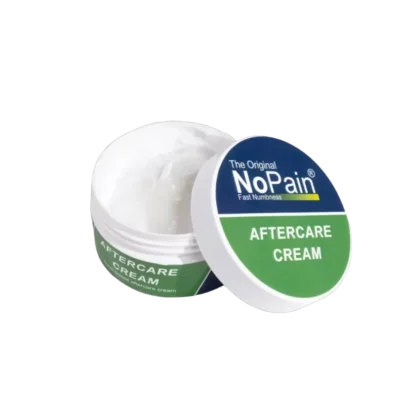
THE NOPAIN® FORMULA
Your aftercare. Beyond the tattoo appointment.
NoPain® Aftercare Cream is a water-based moisturiser for tattooed skin. For a fully healed tattoo that feels dry after time outdoors, it can serve as the moisturising step in your routine.
- Fragrance-free
- Vegan
- 150ml
The formula includes glycerin, dimethicone, panthenol, niacinamide, aloe and sodium hyaluronate. Check the current ingredient list for anything your skin does not tolerate.
No stated SPF. This moisturiser does not replace sunscreen. NoPain® numbing cream is a separate product and must not be used as aftersun.
03 / PUT IT INTO PRACTICE
Your after-sun routine, step by step
This routine is for intact skin and fully healed tattoos. If your skin is burnt, broken or still healing from tattooing, use the relevant guidance further down instead.
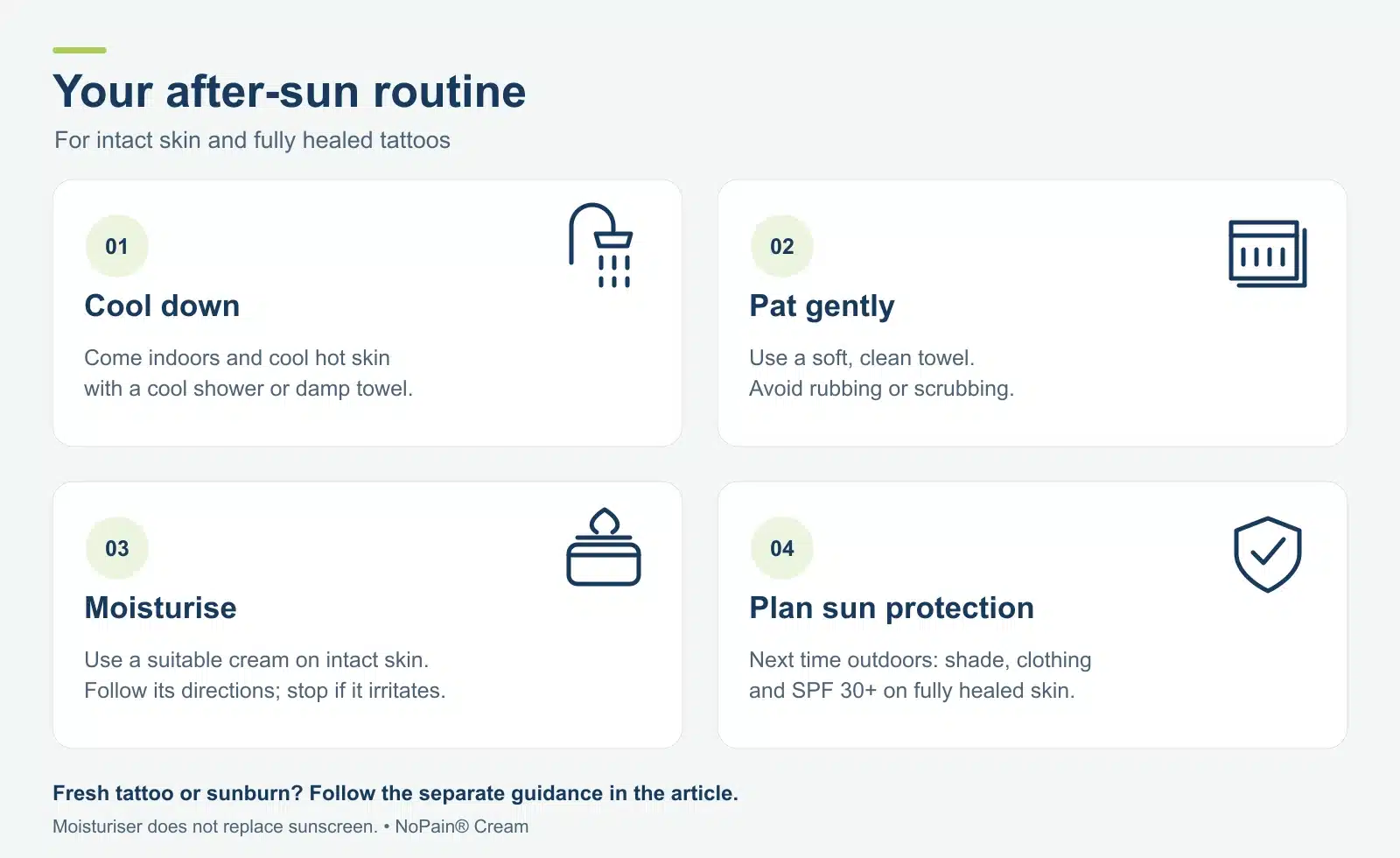
Come indoors and cool down
If your skin feels hot, use a cool shower or a cool, damp towel. Avoid scrubbing. Do not take the return of comfortable skin as a reason to spend longer in the sun; cooling and moisturising are comfort measures, not a reset of your UV exposure.
Pat gently and check the skin
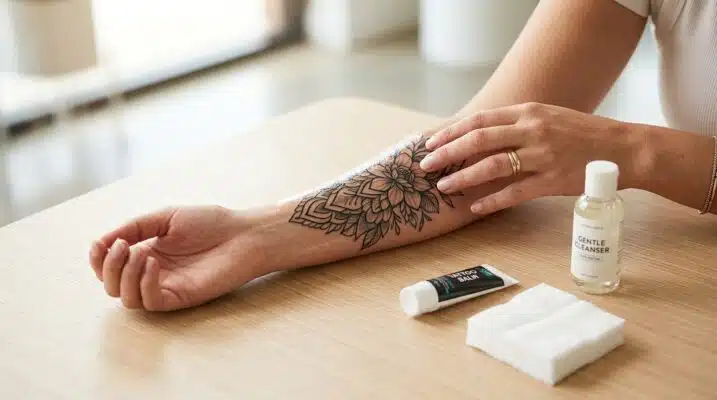
Use a soft, clean towel and look at the area before applying cream. Is it simply a little dry, or is there soreness, swelling, a rash or blistering? That check matters more than following a fixed skincare schedule. If the condition has changed, reconsider the product rather than applying it automatically.
Apply a suitable moisturiser
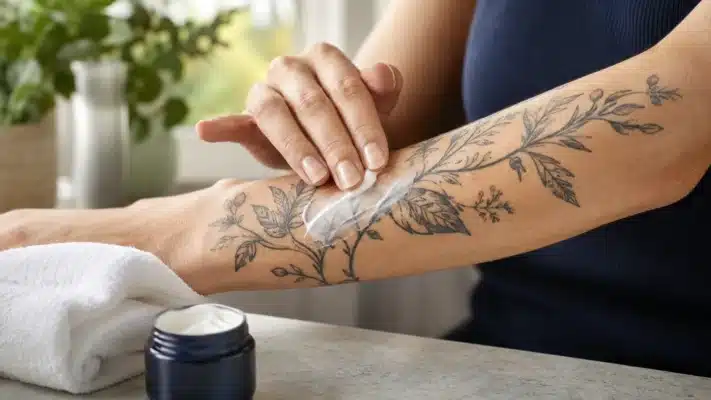
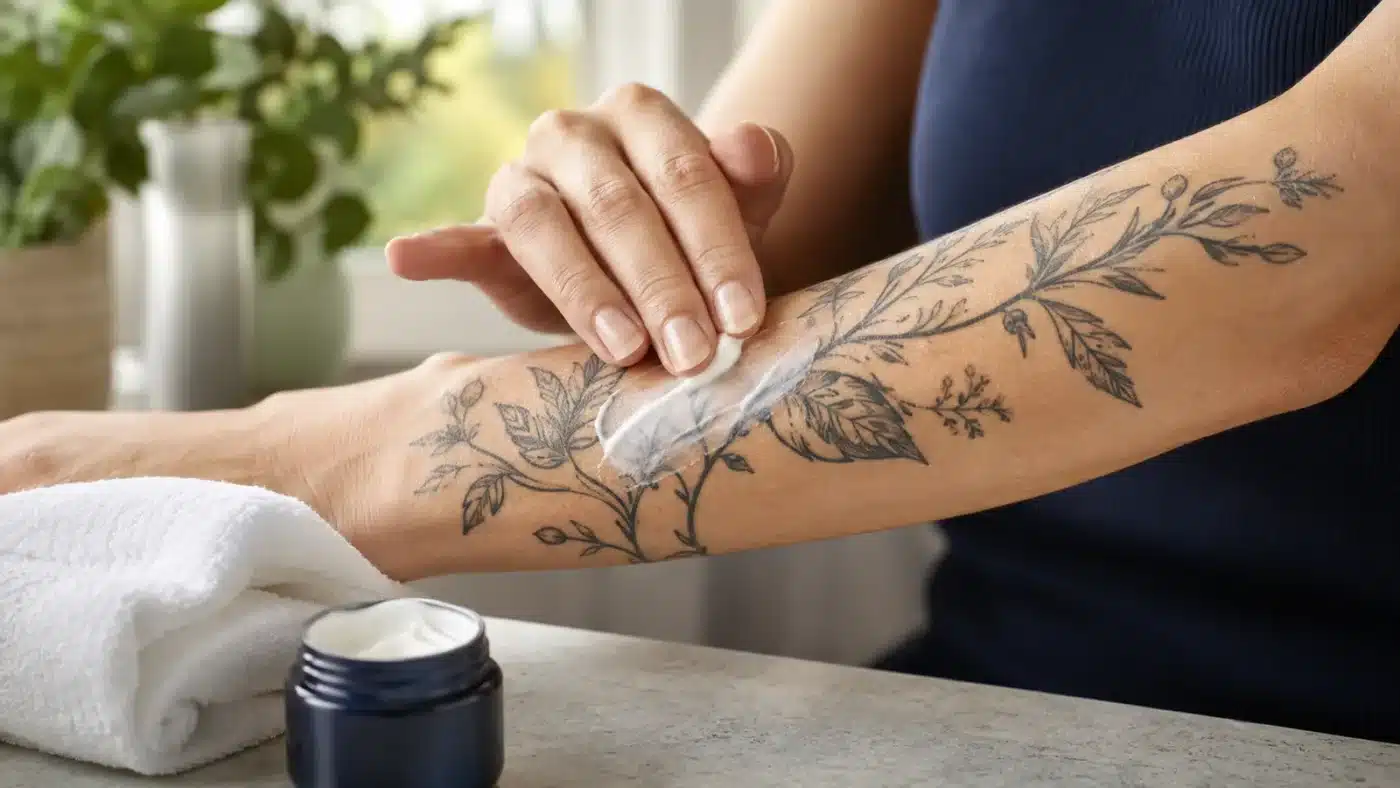
With clean hands, apply your moisturiser according to its directions. For NoPain® Aftercare, use a thin, even layer. There is no need to recreate a thick mask or cover an old tattoo in cling film. If a product causes irritation, stop using it and seek advice if the reaction persists.
On healed skin, let the product instructions and how your skin feels guide your routine. Do not import a fresh-tattoo application schedule into everyday body care: a healing tattoo and an old tattoo have different needs.
Prepare for the next time outdoors
Keep your aftercare cream in the moisturising part of your routine and your sunscreen in the protection part. Before leaving home, check that your sunscreen is available, in date and appropriate for how you will spend the day. Plan shade and clothing as well as a product application.
04 / WHILE YOUR TATTOO HEALS
Can you put aftersun on a fresh tattoo?
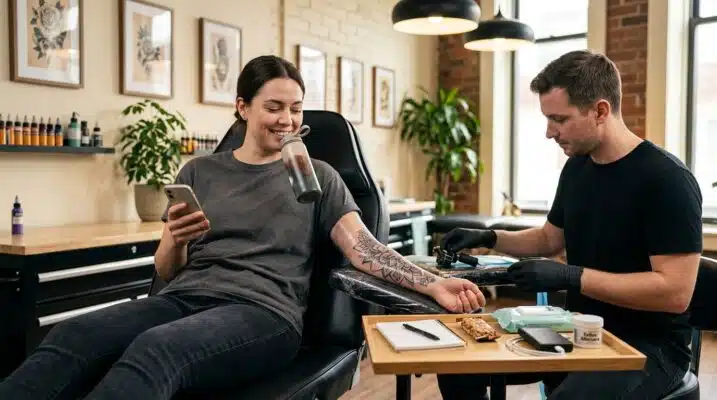
A new tattoo is a healing wound. Do not replace the care recommended by your artist with a regular aftersun lotion because the label sounds soothing. Follow the instructions you were given for washing, dressings and the timing of moisturising.
The European Academy of Dermatology and Venereology’s tattoo aftercare leaflet advises avoiding sun exposure during healing and using sunscreen after complete healing if exposure cannot be avoided. Keep a healing tattoo protected from direct sun with appropriate clothing and shade.
A calendar date alone cannot tell you whether the skin has fully healed. If it is still peeling, scabbing, weeping or tender, do not treat it as an established tattoo. Our guide to the stages of tattoo healing explains the changes you may notice. Ask your artist or a healthcare professional if you are unsure.
This is especially relevant when booking a tattoo before a holiday. Arrange your appointment and plans around the healing instructions, rather than assuming aftersun will make a beach day suitable for newly tattooed skin.
05 / BEFORE YOU GO OUTSIDE
Protecting fully healed tattoos from the sun
Water resistant
For fully healed skin
Moisturising can address dryness, but UV protection has its own requirements. For tattooed skin, the AAD recommends broad-spectrum, water-resistant sunscreen with SPF 30 or higher. Apply it before going outdoors, reapply at least every two hours and follow the label after swimming or sweating. Use shade and protective clothing too.
UV light can fade some tattoo inks. A moisturiser cannot replace faded pigment or create a protective SPF simply because your tattoo looks better after application. Keeping the surface moisturised and reducing sun exposure are complementary habits.
You do not need to choose a sunscreen solely because it says “tattoo” on the packaging. Check its actual protection claims, directions and suitability for your skin. A detailed discussion from MD Anderson Cancer Center on tattoos and sun safety explains why dedicated tattoo sunscreen is not a separate protection requirement.
WHEN DRYNESS IS MORE THAN DRYNESS
What if your tattoo is sunburnt?
Sunburn is more than ordinary dryness. Move out of the sun, cool the skin, drink water and protect the area from further exposure. Do not burst blisters or pull off peeling skin. A pharmacist can help you choose appropriate care instead of assuming your usual aftercare product is suitable.
Seek prompt medical advice for blistering or swelling, or if you feel feverish, dizzy or sick after sun exposure. These are among the warning signs in the NHS sunburn guidance. If the tattoo is fresh as well as sunburnt, get professional advice about caring for the wound.
06 / A FEW MORE ANSWERS
Frequently asked questions
Can I use moisturiser instead of aftersun?
A suitable unperfumed moisturiser can provide the moisturising step. You do not necessarily need both. Choose according to your skin’s condition and the directions, not the assumption that every product labelled aftersun is automatically better.
Can I put aftersun on an old tattoo?
A fully healed tattoo with intact skin can generally be moisturised with a suitable product your skin tolerates. An old tattoo with a new rash or broken skin is a different situation and may need professional assessment.
Can a two-week-old tattoo go in the sun?
Do not use two weeks as an automatic clearance. Healing varies. Keep a tattoo out of direct sun while it heals, follow your artist’s advice and wait until complete healing before using sunscreen on the area.
Is aloe vera aftersun suitable for a new tattoo?
The presence of aloe does not make the complete product suitable for a healing wound. Follow the recommended tattoo aftercare routine instead of substituting an aloe gel or aftersun lotion without checking.
Will aftercare cream stop a tattoo fading in the sun?
No moisturising cream can be assumed to prevent UV-related fading without appropriate sun-protection claims. Use sunscreen on healed skin, plus shade and clothing. Aftercare cream belongs in the moisturising step.
Do I need aftercare cream and aftersun together?
For routine dryness on healed skin, one suitable moisturiser may be enough. Layering several products adds complexity and can make it harder to identify which one causes irritation. Start with a product that fits your skin and its directions.
Keep your routine simple.
Moisturise healed skin. Protect it outdoors. Give a fresh tattoo the care and time it needs.
About this guide: product information comes from NoPain® Cream; general skincare guidance is linked to the clinical and dermatology sources above. Ingredient studies concern the formulas tested, not clinical testing of NoPain® as a sunburn treatment. Learn more about NoPain® Cream.