Understanding what are the stages of tattoo healing is crucial for ensuring your new ink looks vibrant and lasts for years. This guide breaks down the tattoo healing process, from day one to full maturation, offering practical advice for optimal recovery. Tattoo healing is essentially a form of wound healing , where your skin works to repair itself and permanently embed the ink. This process involves distinct phases, each requiring specific care to support your body’s natural regenerative capabilities. The initial days are critical for preventing infection and managing inflammation.
Proper cleansing and the use of gentle, specialized aftercare products are paramount during this vulnerable period. As healing progresses, you’ll experience common symptoms like itching and peeling, which are signs of healthy skin regeneration. For a full range of products to support your healing journey, visit our products page .
Key Takeaways
- Tattoo healing is a multi-stage process involving inflammation, regeneration, and maturation.
- The first week is critical for preventing infection and managing initial inflammation.
- Itching and peeling are normal signs of skin regeneration and should not be interfered with.
- Full internal healing can take months, even after the tattoo appears healed on the surface.
- Consistent, gentle tattoo aftercare is essential throughout all healing stages for optimal results.
What does a tattoo look like on Day 1?
Immediately after tattooing, a new tattoo will appear red, swollen, and sensitive to the touch, reflecting the skin’s immediate traumatic response. The tattooing process involves hundreds to thousands of needle punctures, creating an open wound that the body instantly recognizes and begins to repair. To understand more about how this process works, read our article on how tattoos work . This initial inflammatory response, characterized by increased blood flow, causes visible redness and warmth.
The skin around the freshly inked design will feel tender, similar to a sunburn, and may throb slightly as the body initiates its defense mechanisms.
Upon leaving the tattoo studio, the artist will typically cover the freshly tattooed area with a protective barrier, such as a sterile bandage or a specialized “second skin” wrap. This covering is critical for shielding the open wound from environmental contaminants, bacteria, and friction during the initial hours. It also helps absorb initial oozing and keeps the area moist, which is beneficial for healing.
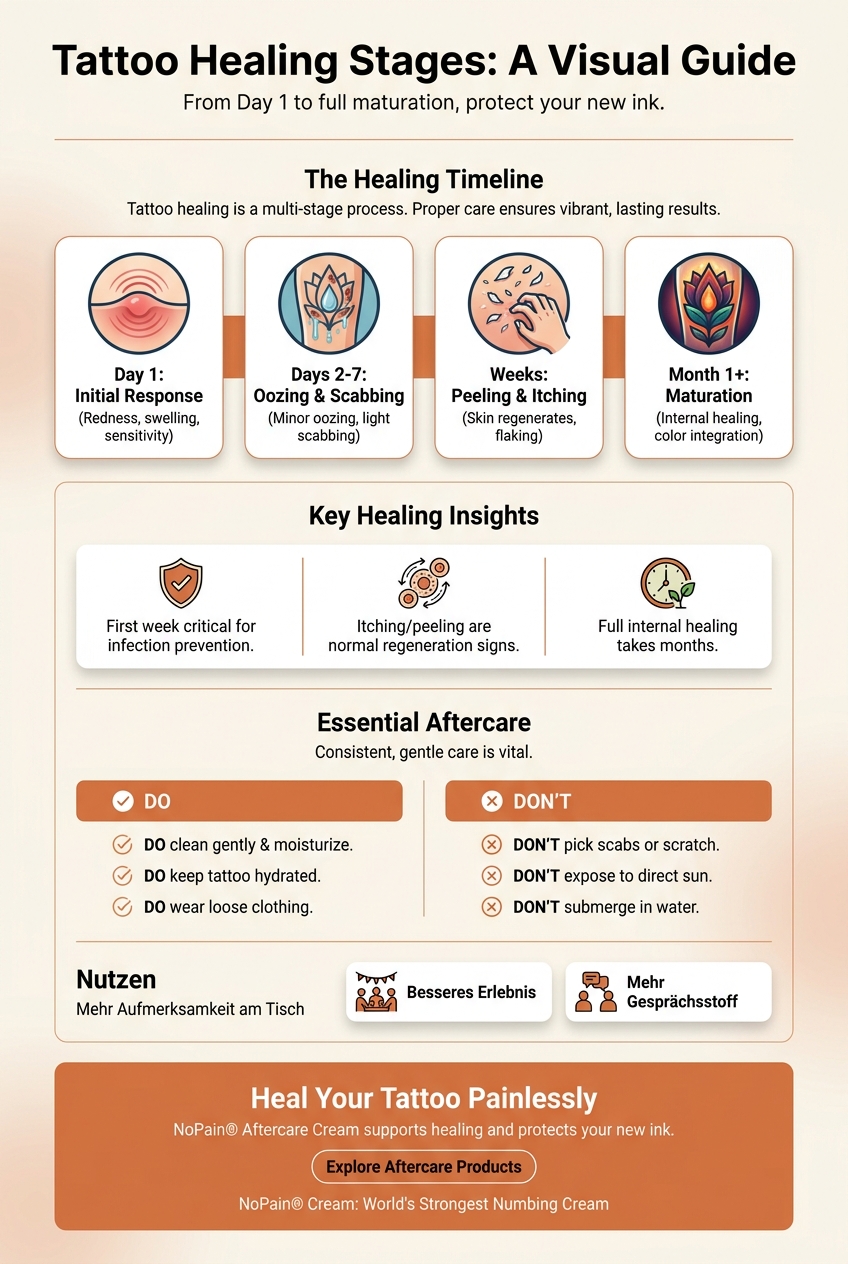
Tattoo Healing Stages: A Visual Guide
From Day 1 to full maturation, protect your new ink.
The Healing Timeline
- Tattoo healing is a multi-stage process. Proper care ensures vibrant, lasting results.
- Day 1: Initial Response (Redness, swelling, sensitivity)
- Days 2-7: Oozing & Scabbing (Minor oozing, light scabbing)
Key Healing Insights
- First week critical for infection prevention.
- Itching/peeling are normal regeneration signs.
- Full internal healing takes months.
Essential Aftercare
- Consistent, gentle care is vital.
- DO clean gently & moisturize.
- DON’T pick scabs or scratch.
Nutzen
- Mehr Aufmerksamkeit am Tisch
- Besseres Erlebnis
- Mehr Gesprächsstoff
It is vital to keep this initial bandage on for the duration recommended by your artist, typically between 2 to 24 hours, to provide essential protection. Removing it too early can expose the vulnerable skin to infection and hinder the crucial first steps of recovery.
Minor oozing from the tattoo is a completely normal occurrence on the first day. This discharge often consists of a mixture of excess ink, clear or slightly yellowish plasma (a component of blood), and a small amount of blood. This weeping is a natural part of the body’s immune response as it works to cleanse the wound and begin forming a protective barrier. Observing this is a sign that initial healing mechanisms are in motion, not cause for alarm.
- Slightly moist or sticky surface under the bandage.
- Faint traces of ink on the inside of the bandage.
- A feeling of warmth emanating from the tattooed area.
- Mild discomfort or tenderness when touched.
Despite the trauma, a fresh tattoo on Day 1 will appear remarkably vibrant and sharp, showcasing the artist’s work with striking clarity. However, this vibrancy is juxtaposed with a raw, almost abraded appearance, akin to a fresh scrape or a mild burn. The skin’s texture may be slightly raised, and the colors will seem intensely saturated due to the ink sitting just beneath the epidermis, combined with the initial inflammation.
The inflammatory phase (1-3 days) is when clotting factors seal open capillaries and white blood cells clear cellular debris, contributing to this distinct raw look. Ensuring proper aftercare from this initial stage is paramount for preserving this vibrancy and promoting healthy healing, potentially aided by specialized tattoo aftercare products.
For example, imagine a new tattoo of a vibrant red rose on your forearm. On Day 1, the red petals will look incredibly bold and intense, but the skin immediately surrounding them will be noticeably red and slightly puffy. You might see a faint sheen of clear fluid on the surface, and the entire area will feel warm and sensitive. This immediate post-tattoo appearance underscores the fact that a fresh tattoo is an open wound requiring meticulous care.
Following your artist’s instructions for gentle cleaning and protection during these first critical hours is essential to support the body’s natural healing trajectory and ensure the longevity and beauty of your new artwork.
Days 2-7: The Oozing and Redness Phase
During days 2-7 of tattoo healing, the initial acute inflammation begins to subside, yet persistent redness and swelling are still common as your body actively repairs the skin. While the vibrant appearance might be slightly dulled by this residual inflammation, it’s a normal part of the healing process and a sign your immune system is working.
A reduction in redness and swelling by at least 50% from day 1 is a positive indicator of proper healing. However, if redness intensifies or spreads beyond the tattoo’s borders, or if swelling becomes excessive and painful, it could signal an infection and warrants professional attention.
Continued light oozing of a clear or slightly tinted fluid, often mixed with a small amount of excess ink, is expected during the first two to three days of this phase. This discharge (primarily composed of plasma and lymphatic fluid) is your body’s natural response to wound healing, carrying away cellular debris and helping to form a protective barrier. For instance, you might notice a thin, sticky film on the surface of your tattoo or a slight residue on your clothing or bedding, particularly after sleeping.
This is typically not cause for alarm unless the fluid becomes thick, cloudy, yellowish, or develops an unpleasant odor, which are all potential signs of infection.
As the body continues its repair work, the tattooed area will gradually begin to feel noticeably tighter and drier. This sensation occurs as the superficial layers of the epidermis start to close and new skin cells form, leading to the initial stages of scab formation, even if microscopic. The skin around and over the tattoo will lose some of its elasticity, feeling less supple than before.
To counteract excessive dryness and prevent cracking, which can damage the delicate healing artwork, it is crucial to apply a thin layer of a specialized aftercare product, such as NoPain Aftercare Cream, once or twice daily.
Maintaining rigorous hygiene is paramount during this phase to prevent infection and facilitate optimal healing. Gentle cleaning with a mild, fragrance-free antibacterial soap and lukewarm water is essential to remove any accumulated plasma, excess ink, and environmental debris without irritating the delicate wound. This process keeps the area clean, allows the skin to breathe, and prevents the formation of thick, heavy scabs that can pull ink out.
- Wash hands thoroughly with soap and water.
- Gently wet the tattooed area with lukewarm water.
- Apply a small amount of mild, fragrance-free soap to your fingertips.
- Lightly lather and clean the tattoo, avoiding scrubbing or harsh rubbing.
- Rinse the tattoo thoroughly with lukewarm water until all soap residue is gone.
- Gently pat the area dry with a clean paper towel, not a cloth towel.
The initial epidermal regeneration, where the outermost layer of skin begins to mend, typically takes about 5 to 7 days, aligning perfectly with the end of this phase. This rapid cell turnover is critical for establishing a new protective barrier over the wounded dermis. As noted by dermatological studies, proper wound care during this period directly influences the quality of the new skin, impacting the long-term clarity and vibrancy of the tattoo.
For example, neglecting to keep the tattoo clean or allowing it to dry out excessively can impede this vital regenerative process, potentially leading to a duller appearance or even scarring.
Weeks 1-2: The Itching and Peeling Stage
During weeks 1-2 of tattoo healing, the tattooed area will begin to feel intensely itchy as new skin cells form and the outer layer sheds. This phase is a crucial indicator that your body is actively repairing the wound created by the tattooing process. The itching sensation is largely attributed to the regeneration of nerve endings and the release of histamines as your skin works to rebuild its protective barrier. While it can be bothersome, this itch is a positive sign of healthy skin regeneration.
Following the initial days of inflammation, a thin layer of dry, flaky skin will start to peel off from the tattooed area, similar to how skin peels after a sunburn. This shedding is composed of dead skin cells from the epidermis, the outermost layer of your skin, disrupted during tattooing. It’s common to see small flakes that may contain some color; this is merely surface ink mixed with dead skin and does not mean your tattoo is fading.
This peeling is a natural and healthy part of the tattoo healing process, indicating that your body is successfully replacing damaged skin cells with new, healthy ones. The permanent ink is deposited into the dermis, the deeper layer of skin, and remains securely in place even as the superficial epidermal layer sheds. The duration and intensity of peeling can vary based on the tattoo’s size, location, and individual skin type, typically lasting between 7 to 14 days.
It is paramount to resist the urge to scratch or pick at the peeling skin, as this can severely compromise the healing process and the final appearance of your tattoo. Picking at scabs or flakes prematurely can pull out ink, leading to patchy areas, uneven color retention, and even permanent scarring. Scratching a healing tattoo significantly increases the risk of infection by introducing bacteria from under your fingernails into the open wound.
To support your tattoo through this itchy and peeling stage, consistent and gentle aftercare is essential. This involves:
- Washing the tattoo two to three times daily with a mild, fragrance-free antibacterial soap.
- Gently patting the area dry with a clean, soft towel (avoid rubbing).
- Applying a thin layer of specialized aftercare cream, such as a quality tattoo aftercare cream, to keep the skin hydrated and minimize discomfort.
Moisturizing helps to soothe the itch and keeps the skin supple, preventing excessive dryness and cracking.
Weeks 2-4: The Skin Regeneration and Settling Phase
During weeks 2-4 of tattoo healing, most of the visible peeling has concluded, and a thin, new layer of skin begins to form over the tattooed area. By this point, initial flaking and shedding of dead skin cells should largely be complete, leaving a smoother surface. The tattoo itself may start to take on a somewhat dull or cloudy appearance as this fresh epidermal layer develops, partially obscuring the vibrant ink beneath. This temporary change in clarity naturally indicates the skin’s regenerative efforts, protecting the newly deposited pigment.
With the cessation of significant peeling, pronounced redness and inflammation from initial days should be substantially reduced or entirely absent. The skin around the tattoo will no longer feel as tight or tender, signaling a decrease in the inflammatory response and the beginning of a more comfortable phase. For instance, where previously a light touch might have caused discomfort or a burning sensation, the skin now feels more integrated and less reactive, akin to the sensation of a minor sunburn fading completely.
This shift indicates that the body’s acute wound response has subsided, allowing the healing process to advance internally.
Maintaining consistent moisturizing remains paramount during this period to support the newly formed skin and ensure its optimal health. Regular application of a specialized aftercare cream helps to keep the delicate, regenerating skin hydrated, preventing excessive dryness, cracking, or further irritation. This continued hydration is crucial for the skin to remain supple and resilient while rebuilding its protective barrier.
Using a product like a high-quality aftercare cream, such as those found in a 3-box aftercare cream bundle , can significantly aid in preserving the integrity and vibrancy of your new tattoo. Proper moisturizing also minimizes lingering itchiness, a common symptom as nerve endings regenerate.
The dull or cloudy appearance is directly attributable to the formation of a thin, new layer of epidermal skin over the inked dermis. This translucent layer acts as a natural protective barrier, temporarily muting the intensity of the colors underneath. The visible outer skin layer of a fresh tattoo appears fully healed within 2 to 3 weeks, though complete healing of the deeper skin layers beneath the surface can require up to 1 year.
It’s a temporary visual effect, often described as a “milky” or “ghosting” phase, and does not indicate any issue with the tattoo itself. This new skin is still delicate and requires gentle care to mature properly, allowing the true vibrancy of the tattoo to emerge.
As the skin continues its regeneration, the tattoo enters a crucial settling phase where its long-term appearance begins to solidify. While the surface may look completely healed, the internal processes of cellular repair and pigment integration are still actively underway. To support this ongoing maturation, consider the following key steps:
- Continue daily gentle cleansing with a mild, fragrance-free soap.
- Apply a thin layer of moisturizing aftercare product consistently throughout the day.
- Avoid prolonged sun exposure, as UV rays can degrade ink and impede full healing.
During this two-to-four-week period, it is vital to resist picking or scratching any remaining flakes or scabs to prevent scarring or ink displacement. This diligent approach ensures the new skin fully integrates with the underlying ink, leading to a vibrant and lasting tattoo.
Month 1 and Beyond: The Maturation Phase
After initial healing, the maturation phase begins, where the tattoo’s true vibrancy and clarity emerge as new skin fully settles. This extended period, spanning several months, sees the outermost layers of skin become more transparent, allowing the underlying ink to display its intended brightness and detail. This transformation is a natural part of the body’s regenerative process, strengthening the skin and defining colors within the dermis.
Patience is key during this stage, as these subtle yet significant changes contribute to the final, long-lasting appearance of your body art.
The permanence of tattoo ink within the dermis is largely due to the intricate actions of the body’s immune system. This involves a continuous cycle of cellular activity to encapsulate and secure pigment particles:
- When ink is deposited into the dermis, immune cells called macrophages are dispatched to engulf these foreign pigment particles.
- Unlike bacteria or viruses, tattoo ink particles are too large for macrophages to fully break down or remove from the body.
- Consequently, these ink-laden macrophages become trapped within the dermal layer, effectively walling off the pigment.
- As these macrophages eventually die, they release the ink, which is then swiftly recaptured by new, incoming macrophages, ensuring the tattoo’s long-term visibility through a “release-recapture” cycle.
This ongoing cellular interaction is what ultimately anchors the artwork permanently in your skin.
As the tattoo enters its maturation phase, the skin should feel smooth and look remarkably similar to surrounding un-tattooed skin, with the artwork visible beneath the surface. Any residual dryness, flaking, or raised textures from earlier healing stages should be completely resolved. The skin should exhibit normal elasticity and texture, indicating full integration of ink and completed regenerative processes. A fully healed tattoo typically integrates seamlessly, with skin texture over the design feeling identical to un-tattooed skin. This smooth, even surface indicates proper healing and successful ink settlement.
Long-term tattoo aftercare, particularly diligent sun protection, is paramount to preserving the ink’s color and preventing premature fading. Ultraviolet (UV) radiation is the primary culprit behind tattoo degradation, breaking down pigment molecules through photodegradation. Regular application of a broad-spectrum sunscreen with an SPF of 30 or higher to tattooed areas when outdoors is crucial, even on cloudy days, to shield the artwork from damaging UV rays.
Beyond sun protection, a holistic approach to long-term care is essential for maintaining your tattoo’s vibrancy and longevity. Investing in a comprehensive tattoo aftercare bundle that includes a quality moisturizer and sun protection can significantly extend the life of your artwork, ensuring it remains a vibrant testament to your personal expression for decades.
How to Know if Your Tattoo is Healing Properly
Knowing if your tattoo is healing properly involves observing steady improvement in its appearance and feel. Initially, it’s normal to experience some redness, swelling, and tenderness around the tattooed area. Any stagnation or worsening of these initial reactions could signal an issue.
As your tattoo progresses through its healing phases, especially after the peeling stage concludes, you should observe a clear and vibrant appearance. The lines will remain sharp, and the overall image will be distinct, reflecting proper ink retention and skin regeneration.
Persistent or worsening symptoms are critical indicators of potential complications like infection, requiring immediate attention. These red flags include:
- Persistent or intensifying pain.
- Excessive redness spreading outwards, especially with warmth.
- Pus (thick yellow or green discharge).
- Fever or chills.
Based on published surveys, between 0.5% and 6% of people with a tattoo experience infectious complications after being tattooed. Early identification is vital for intervention.
If you are unsure about your tattoo’s healing progress, or if any warning signs manifest, seek professional advice promptly. Your tattoo artist is an excellent first point of contact for initial guidance.
Maintaining diligent aftercare throughout the healing journey is paramount to ensuring your artwork’s longevity and vibrancy. Your commitment to proper care safeguards your health and preserves the intricate details and bold colors of your new tattoo for years to come.
FAQ
What does a tattoo look like when it’s healing?
When a tattoo is healing, it goes through several visual stages. Initially, it will be red, swollen, and may ooze ink and plasma.
How do I know if my tattoo is healing properly?
A tattoo is healing properly if the initial redness and swelling gradually subside, itching and peeling occur without excessive discomfort, and the ink remains vibrant.
Is it normal for a tattoo to peel?
Yes, peeling is a completely normal and healthy part of the tattoo healing process. As your skin regenerates, it sheds the damaged outer layers, much like a sunburn.
How long does the itchy stage of a tattoo last?
The itchy stage of tattoo healing typically lasts for one to two weeks, often coinciding with the peeling phase. This itchiness is a sign that your skin is actively healing and new cells are forming.
What is the hardest stage of tattoo healing?
Many people find the itching and peeling stage (weeks 1-2) to be the hardest due to the intense discomfort and the temptation to scratch.
Should I put aftercare cream on a peeling tattoo?
Yes, absolutely. Applying a thin layer of a recommended tattoo aftercare cream is essential during the peeling stage.
Final thoughts
The journey of a tattoo from fresh ink to a permanent piece of art is a fascinating display of your body’s skin regeneration capabilities. Remember that while visible healing might seem complete within a month, the deeper layers of your skin continue to integrate the ink for several months. For comprehensive guidance on caring for your new tattoo, explore our tattoo aftercare guide. Should you ever feel uncertain about your tattoo’s healing progress, don’t hesitate to reach out to your tattoo artist or a healthcare professional.